





























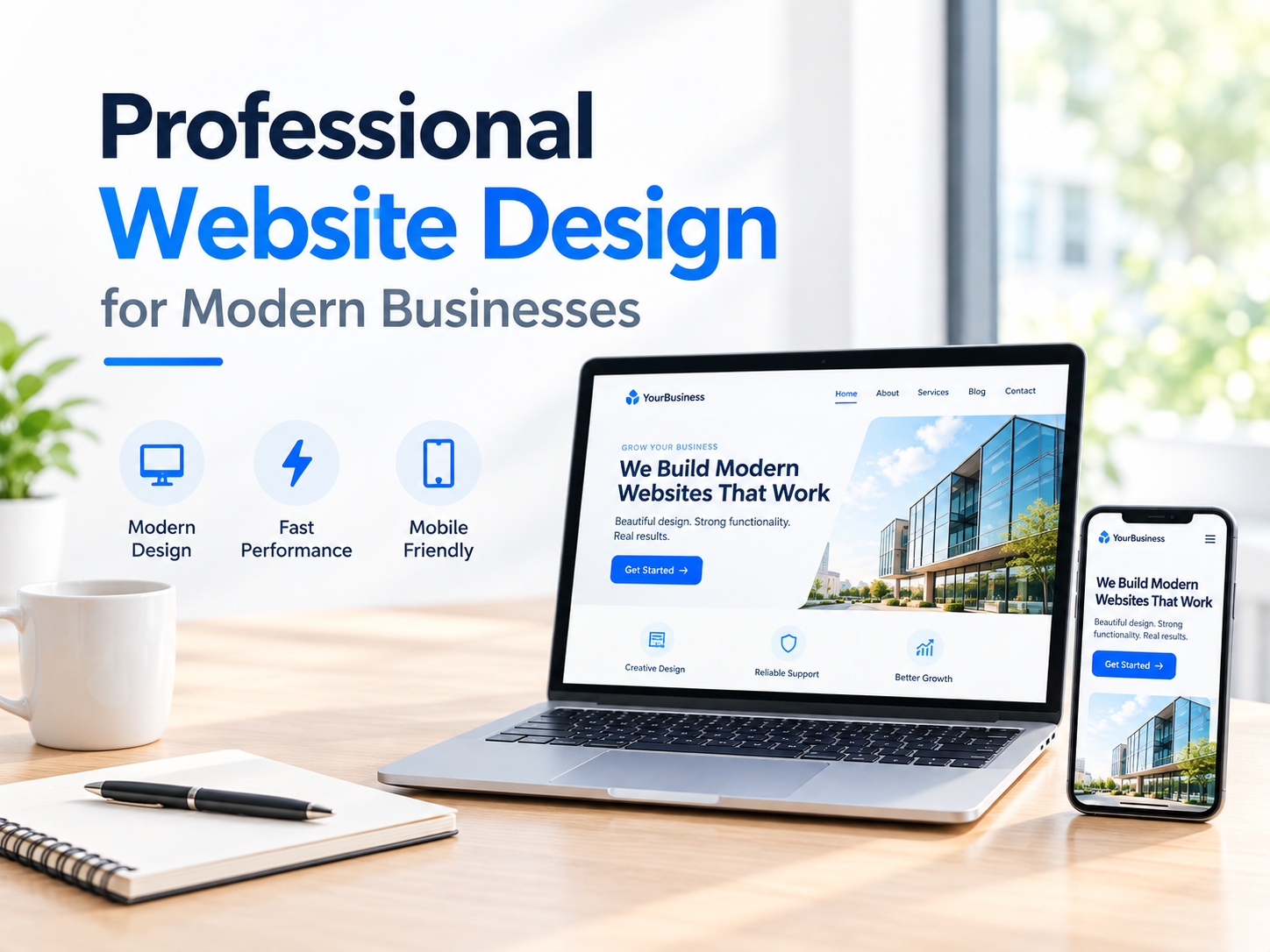
A professional website is more than an attractive online presence. For many businesses, it is the first place potential customers learn about their services, compare their options and decide whether to make contact.
Professional website design combines visual presentation, user experience, performance, mobile usability and search engine optimisation to create a website that supports real business goals.
Whether you are launching a new business website or improving an existing one, a well-planned website can make it easier for customers to find information, understand your services and take the next step.
What Is Professional Website Design?
Professional website design is the process of creating a website that looks credible, works smoothly and provides a clear experience for visitors.
A professionally designed website considers more than colours, images and fonts. It also considers how people navigate the website, how quickly pages load, how the site works on mobile devices and how search engines understand the content.
A professional business website should communicate three things quickly:
- What your business does
- Why customers should choose your services
- How customers can contact or engage with your business
When these elements work together, your website becomes a useful business tool rather than simply an online brochure.
Why Professional Website Design Matters
Customers often form an impression of a business from its website before making contact. An outdated, confusing or difficult-to-use website can make it harder for visitors to understand what a business offers.
Professional website design helps create a consistent experience from the moment someone lands on your homepage.
Build Trust and Credibility
A clean and well-structured website can make a business appear established and reliable.
Professional design can be used to present:
- Business information
- Services and solutions
- Customer testimonials
- Project portfolios
- Contact details
- Frequently asked questions
- Industry experience
Clear information helps visitors understand the business without having to search through unnecessary pages.
Make Information Easier to Find
Good website design should make navigation simple.
Visitors should be able to move between important pages without having to guess where information is located. A logical menu structure, clear headings and well-organised content can improve the overall user experience.
Encourage More Enquiries
A website should have a purpose.
For a service business, that purpose may be generating enquiries, phone calls, quote requests or bookings. Professional website design can place clear calls to action throughout the website so visitors know what to do next.
Examples include:
- Request a Quote
- Contact Us
- Book a Consultation
- Call Our Team
- Get Started
- Learn More
The right call to action depends on the business and the customer journey.
7 Key Elements of Professional Website Design
A successful website is built from several elements that work together.
1. Clear Website Structure
A professional website should have a logical structure.
Important information should be organised into relevant pages rather than placing everything on one long page. Depending on the business, a website may include:
- Home
- About
- Services
- Individual service pages
- Projects or portfolio
- Blog or resources
- Contact
A clear structure also gives search engines a better understanding of the relationship between different pages.
2. Modern Visual Design
Visual design influences how visitors perceive a business.
A modern website should use a consistent combination of:
- Brand colours
- Typography
- Images
- Buttons
- Spacing
- Icons
- Page layouts
Good design does not mean adding more visual effects. In many cases, a simple and consistent layout creates a clearer experience.
The design should support the content rather than compete with it.
3. Mobile-Friendly Website Design
People access websites from a wide range of devices, including smartphones, tablets and desktop computers.
A mobile-friendly website should adapt its layout to different screen sizes. Text should remain readable, buttons should be easy to use and important information should not become difficult to access on smaller screens.
Responsive design is therefore an important part of professional web design.
4. Fast Website Performance
Website performance can affect both user experience and search visibility.
Large images, unnecessary scripts, excessive animations and poorly configured plugins can contribute to slower loading times.
A professional website should consider performance during the design and development process.
Common optimisation techniques include:
- Compressing images
- Using modern image formats
- Reducing unnecessary scripts
- Optimising CSS and JavaScript
- Using suitable hosting
- Implementing caching
- Limiting unnecessary animations
Performance should be considered alongside design rather than treated as an afterthought.
5. Easy Navigation
Visitors should not have to work hard to find important information.
A clear navigation system can include descriptive menu labels, logical page categories and prominent links to important services.
For example, instead of hiding all services under one generic menu item, a business may create dedicated pages for its main services.
This can help visitors understand the business while also creating more opportunities to target relevant search queries.
6. SEO-Friendly Website Design
Professional website design and SEO work closely together.
A visually attractive website may still struggle to generate organic traffic if search engines cannot easily understand its content.
An SEO-friendly website should consider:
- Page titles
- Heading structure
- Meta descriptions
- Internal links
- Image alt text
- Descriptive URLs
- Useful content
- Mobile usability
- Website performance
- Structured content
Each important service should ideally have a clear purpose and a dedicated page where appropriate.
For example, a business offering several different services may benefit from individual service pages instead of putting every service into a single block of text.
7. Clear Calls to Action
A visitor should know what action they can take after reading a page.
Calls to action can be placed throughout the website without making the design feel overly promotional.
For example:
Need a new website?
Speak with our team about your website requirements.
A clear CTA connects useful information with the next stage of the customer journey.
Professional Website Design and User Experience
User experience is one of the most important parts of modern website design.
A website can look impressive but still provide a poor experience if visitors cannot quickly find what they need.
Good user experience considers:
- Page hierarchy
- Navigation
- Readability
- Content spacing
- Button placement
- Mobile usability
- Page speed
- Forms and contact options
The goal is to reduce unnecessary friction.
When visitors can quickly understand a business and find relevant information, they have a clearer path towards contacting the business.
How Professional Website Design Supports SEO
SEO should not be added only after a website has been designed.
The structure of a website can influence how search engines discover, interpret and index its content.
A professional website design process can incorporate SEO from the beginning.
For example, the website structure can be planned around important services and customer search intent. Individual pages can then provide useful information related to those services.
Internal links can connect related pages, while clear headings help organise the content.
This creates a website that is designed for both people and search engines.
Professional Website Design for Small Businesses
Small businesses often need their website to perform several jobs at the same time.
It may need to introduce the business, explain services, answer common questions, generate enquiries and support local search visibility.
This makes website planning particularly important.
A professional small business website does not necessarily need dozens of pages. What matters is having the right pages with useful, relevant content.
A typical small business website might include:
- A clear homepage
- An About page
- Dedicated service pages
- A portfolio or project section
- Contact information
- FAQs
- Helpful resources or blog content
The exact structure should reflect the business, its customers and its goals.
How to Choose a Professional Website Design Service
Choosing a website design service is about more than comparing visual styles.
Before starting a project, consider whether the provider understands your business, your target customers and your long-term online goals.
Questions worth asking include:
- Does the service include responsive design?
- Can the website be managed and updated easily?
- Is SEO considered during development?
- How is website performance handled?
- Can the website grow with the business?
- Is ongoing technical support available?
- Is the website built around the business’s actual goals?
It is also useful to review previous projects and assess whether the websites provide clear navigation, strong content structure and a consistent user experience.
Professional Website Design vs DIY Website Design
DIY website builders can be useful for simple projects, particularly when a business has a limited initial requirement.
However, professional website design can provide greater control over website structure, branding, user experience, SEO and functionality.
The right approach depends on the business.
A small personal project may only require a basic website, while a growing business may need a more strategic online presence that can support marketing and customer enquiries.
Build a Website That Supports Your Business
A professional website should not simply look good when it launches.
It should provide a strong foundation for future growth.
As a business develops, the website may need new services, landing pages, articles, project examples, integrations or marketing campaigns.
A well-planned website makes these changes easier to manage.
This is why professional website design should be approached as a combination of design, content, technology and business strategy.
Frequently Asked Questions
What is professional website design?
Professional website design combines visual design, usability, responsive layouts, performance, content structure and SEO considerations to create a website that effectively represents a business online.
Why does a business need professional website design?
A professionally designed website can help a business present its services clearly, establish credibility, improve user experience and provide visitors with a clear path to make an enquiry or take another desired action.
What makes a website look professional?
Consistent branding, clear typography, high-quality images, logical page layouts, easy navigation, useful content and responsive design all contribute to a professional website.
Is professional website design important for SEO?
Yes. Website structure, content organisation, mobile usability, page performance, internal linking and other technical elements can all contribute to an SEO-friendly website.
How long does professional website design take?
The timeframe depends on the size and complexity of the website. A simple business website may require considerably less development time than a larger website with multiple services, custom functionality or integrations.
Should a small business invest in professional web design?
The answer depends on the business’s goals and requirements. If the website is an important source of enquiries, information or online visibility, investing in a well-planned website can provide a stronger foundation for long-term growth.
Create a Professional Website for Your Business
Your website should do more than display your business information.
It should make your services easy to understand, provide a positive experience for visitors and create clear opportunities for people to contact your business.
With the right combination of professional website design, useful content, responsive development, SEO and performance optimisation, your website can become a valuable part of your overall digital presence.
If your current website feels outdated, difficult to navigate or no longer reflects your business, it may be time to consider a more professional approach to website design.